
Roofing Services in South California
Local Roofing Contractor Expertise
Homeowners across South California trust local roofing contractors for residential re-roof projects that match the region's unique architectural styles—from Spanish tile estates to modern flat-roof homes. A solid roof protects against intense sun exposure, seasonal Santa Ana winds, and occasional winter storms. Whether your home sits in a hillside community with strict HOA guidelines or near the coast where salt air affects metal components, the right contractor understands local building codes, permit processes, and material choices that work best in Southern California's climate.
How We Work
A residential re-roof in South California requires careful planning. We guide you through each phase so your project stays on track and compliant with local rules.
What's Involved
Our process moves through three clear phases: Planning & Inspection, Material & Permit Work, and Installation & Final Review. Each step ensures the roof meets both performance standards and HOA requirements if your community has them.
Site Assessment & Planning
We inspect your current roof, check HOA restrictions, and identify the best material for your home's age, style, and climate exposure.
Material & Permit Coordination
We select code-compliant materials, submit permit applications, and obtain any HOA architectural approval before demo starts.
Removal & Installation
Old roofing is safely removed, decking inspected, and new materials installed by licensed technicians following local building codes.
Final Inspection & Sign-Off
Local building inspector approves the work. We provide warranty documentation and ensure all permits are closed officially.
You'll always know what's happening next—and when.
Our Services
South California homes span Spanish Colonial to mid-century modern. We offer solutions that match your roof style and protect against regional climate challenges.
Spanish Tile & Clay Roofs
Clay tile is signature in Mediterranean-style homes throughout the region. These roofs reflect heat in hot climates and last decades. The underlayment beneath clay tiles eventually needs attention as the tiles themselves remain durable.
- Heat Reflection: Natural cooling benefit for summer months
- Earthquake Resistant: Heavy weight anchors roofing system
- HOA-Friendly: Matches many architectural guidelines in established neighborhoods
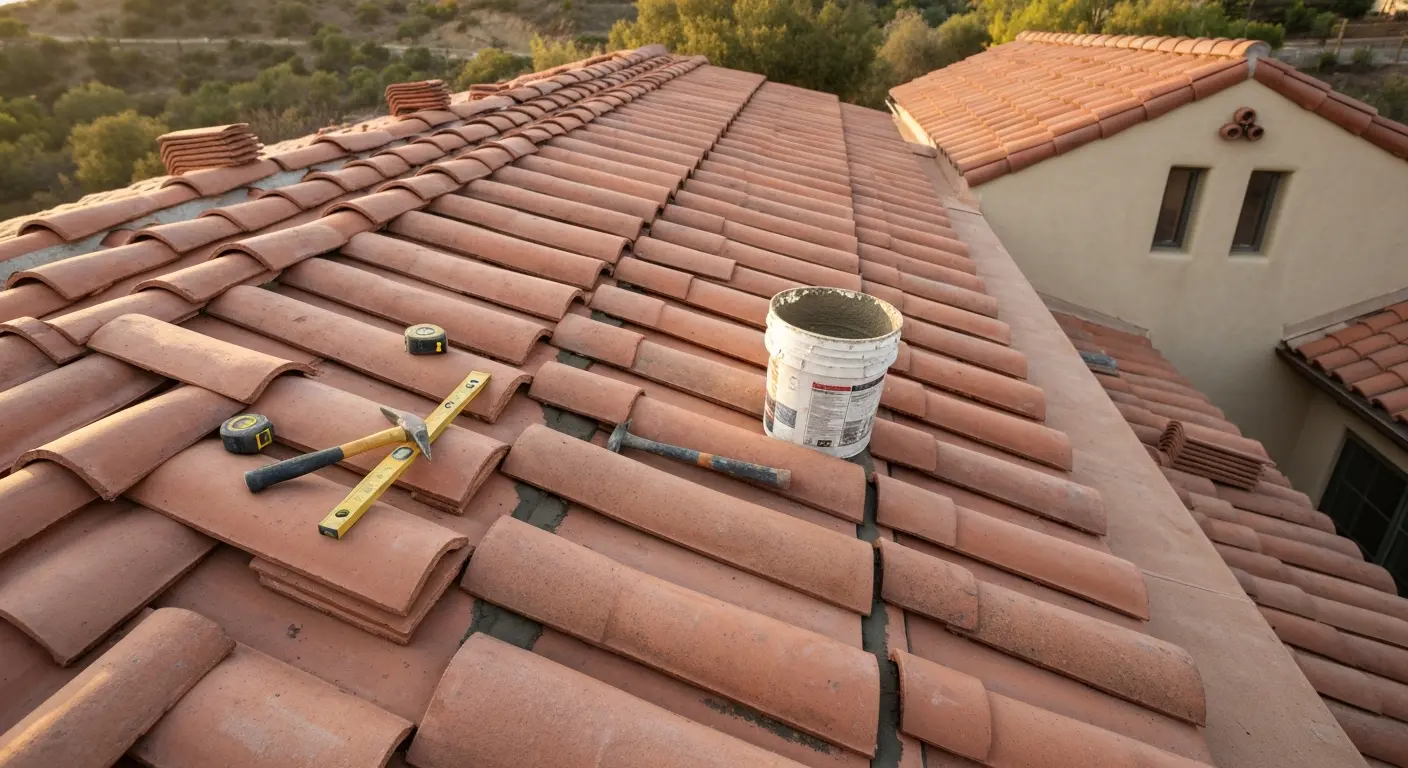
Clay tile roof preserving home value in a hillside community with strict architectural guidelines.
Asphalt Shingle Replacement
Asphalt shingles are the most common and budget-friendly option. In South California's heat, UV-resistant architectural shingles outperform basic 3-tab versions. They show wear visibly, making inspection straightforward.
- Affordable Entry Point: Lower upfront cost than tile or metal
- UV-Resistant Options: Extended lifespan in intense sun
- Easier Repairs: Individual shingles can be replaced if damaged
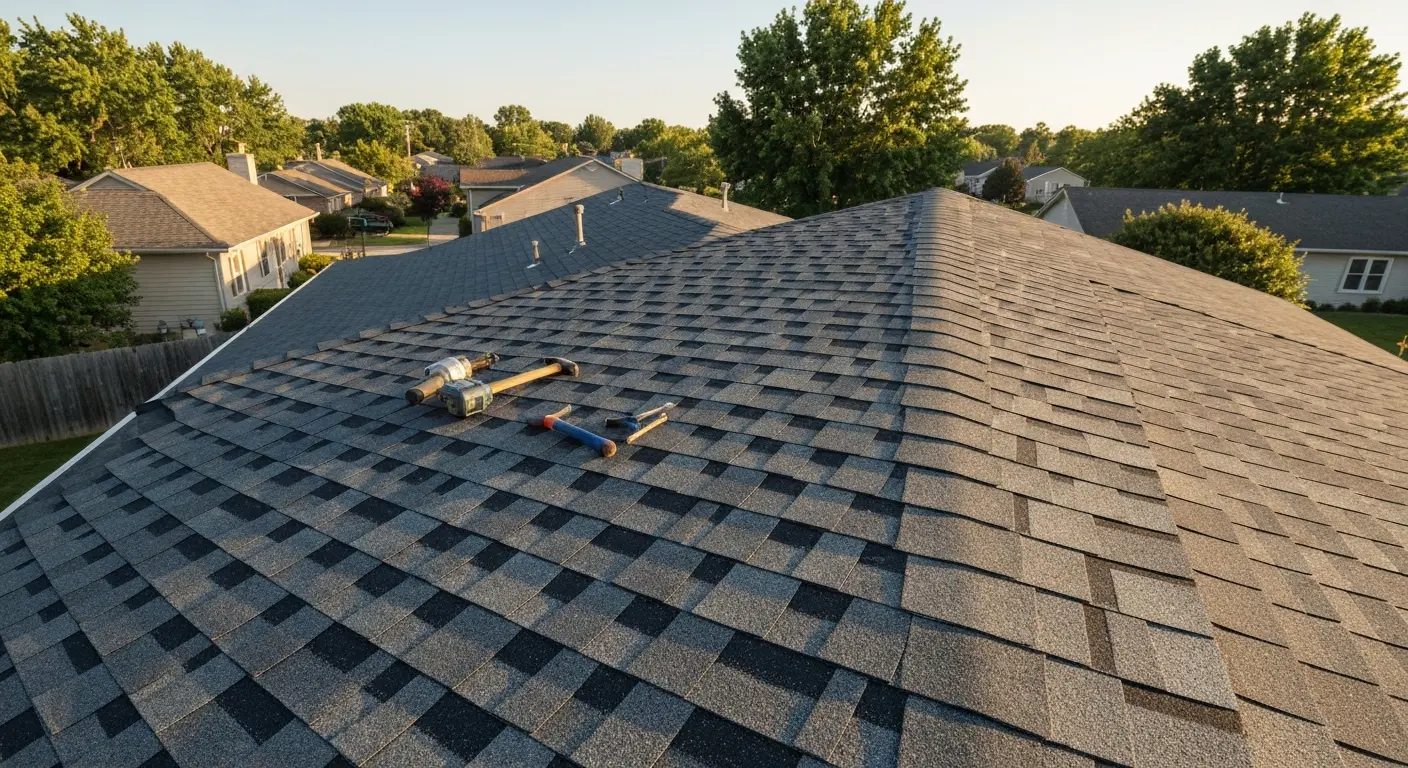
New asphalt shingle installation protecting a suburban home from summer UV exposure.
Metal Roofing for Fire & Heat Resistance
Metal roofing reflects sunlight and heat, cutting cooling costs in inland Southern California. It resists wind uplift and carries Class-A fire ratings—critical for wildfire-prone zones. Metal can be finished to resemble tile or shingles if aesthetics matter for your HOA approval.
- Fire-Resistant: Class-A rated for wildfire protection
- Energy Efficient: Reduces heat absorption and cooling bills
- Wind Resistant: Stands up to Santa Ana wind gusts
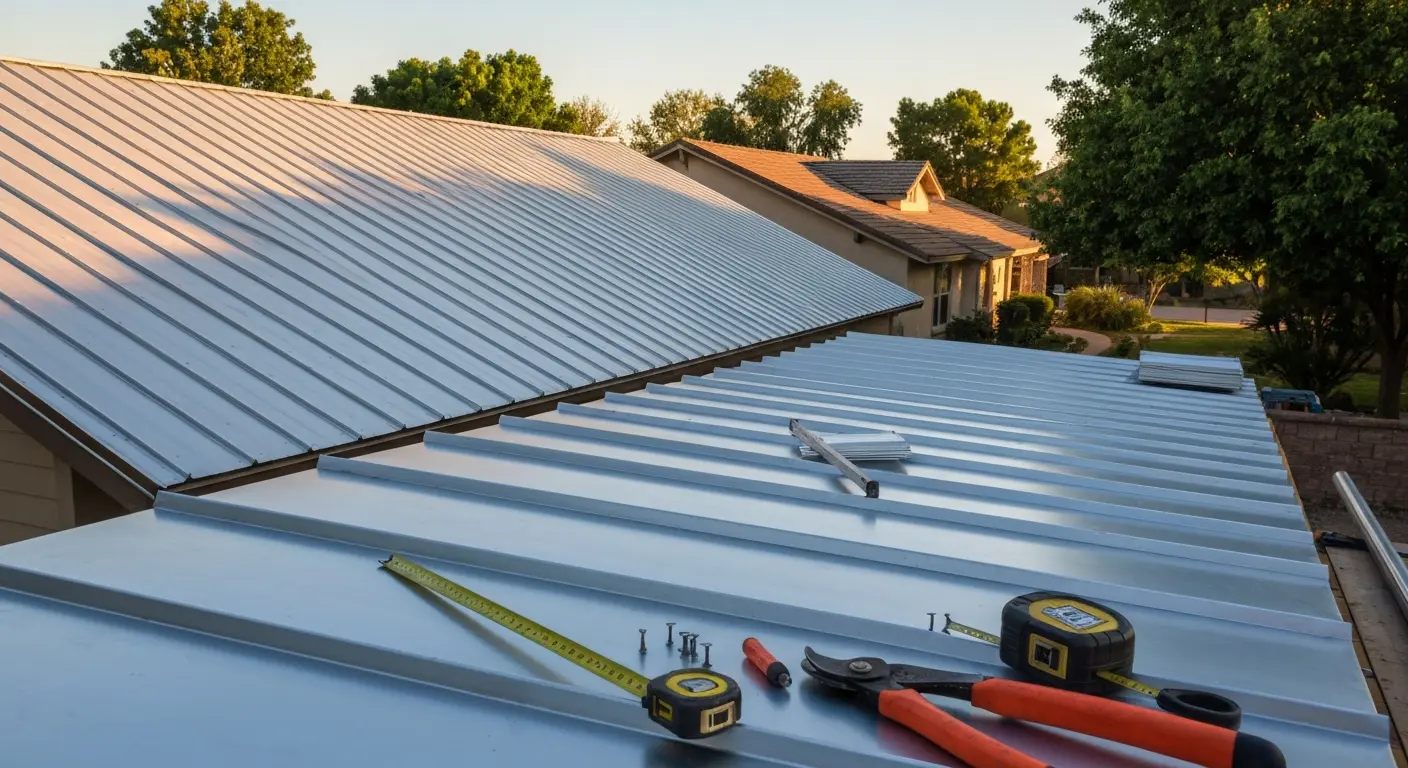
Metal roofing protecting an inland home and reducing summer heat absorption.
Flat & Low-Slope Roofs
Modern and mid-century homes often feature flat or low-pitched designs. These require proper drainage and often benefit from cool roof coatings to reflect heat and meet Title 24 energy codes. We inspect underlayment and improve ventilation to prevent leaks.
- Title 24 Compliant: Cool roof ratings meet California energy standards
- Reflective Coatings: Lower roof temperature and cooling costs
- Improved Drainage: Key to preventing pooling and leaks
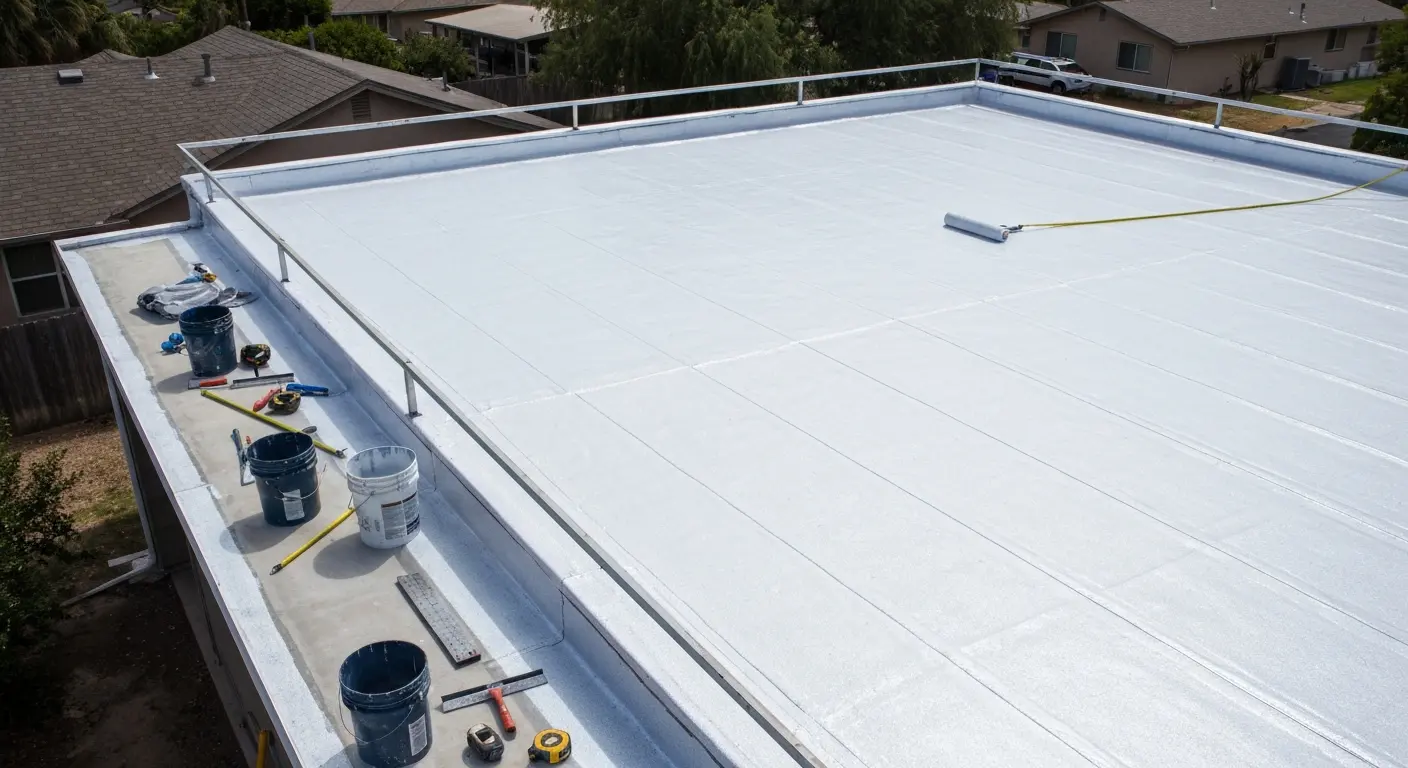
Modern home with upgraded flat roof coatings for heat reduction and code compliance.
Why Local Expertise Matters
South California's climate, architectural diversity, and regulatory landscape demand roofing partners who know the region.
UV & Heat Damage Prevention
Year-round sun breaks down asphalt shingles and exposed fasteners. We select UV-resistant materials and proper ventilation to extend roof life in intense heat.
Santa Ana Wind Protection
Strong fall and winter winds lift shingles and loosen flashing. Proper fastening and sealed underlayment reduce wind uplift damage and water intrusion.
HOA Approval Navigation
Many communities require specific materials, colors, and contractor pre-approval. We handle architectural review submissions and ensure work meets HOA standards.
Building Code & Permit Expertise
California Title 24 energy codes and local building standards require compliant materials and installation. We manage the full permit process to avoid fines or delays.
When water leaks through after rainstorms or shingles tear from wind gusts, don't wait. South California's occasional intense rain events can expose weak spots fast. Early detection saves thousands in water damage.
What to Expect from Your Re-Roof
Every South California home is different. Understand how we customize the process for your specific roof and community.
Inspection & Material Selection
We examine decking, assess damage patterns, and recommend materials that match your home's style and neighborhood standards. In coastal areas, we prioritize corrosion-resistant fasteners and flashing. In high-fire zones, we specify fire-rated materials.
HOA Coordination
If your community has architectural rules, we prepare submissions with samples and renderings, liaise with board members, and address any requests before work begins. This step prevents costly delays or required rework.
Permitting
Most re-roofs in California require building permits. We submit applications, obtain approvals, and schedule inspections. Unpermitted work can void warranties and create title issues at sale.
Professional Installation & Cleanup
Licensed technicians handle removal, decking repairs, and new roof installation. We clean up debris daily and protect your landscape during work. Final inspection confirms code compliance and quality.
Frequently Asked Questions
Do I need a building permit for a roof replacement in South California?
Yes. Most roof replacements require permits. Removing more than 25% of the roof or changing material type always needs a permit. We handle the full application and inspection process to avoid fines or warranty issues.
What if my HOA has strict roofing rules?
Many South California communities require architectural approval before roofing work starts. We submit material samples, renderings, and contractor credentials. In some cases, California state law protects fire-safe roofing even if HOA rules differ.
How does UV damage and heat affect roofs in South California?
Year-round sun and heat cause asphalt shingles to become brittle and crack. Fasteners corrode and underlayment dries out. Metal and tile roofs with cool coatings handle the heat better. Regular inspections catch damage early.
Will a new roof meet California Title 24 energy codes?
Yes. We select materials and install cool roof coatings that meet Title 24 reflectance and emittance standards for your climate zone. This improves energy efficiency and often qualifies for rebates.
Can Santa Ana winds damage a new roof?
Strong fall and winter winds can lift shingles if not properly secured or damage flashing. Proper fastening, sealed underlayment, and regular inspections after major wind events protect against wind-driven rain damage.
What about coastal salt air and metal roofing?
Near-coastal communities face salt corrosion on metal fasteners and flashing. We use corrosion-resistant aluminum, stainless steel fasteners, and protective coatings to prevent rust and extend material life.
DISCOVER WHAT OUR CUSTOMERS HAVE TO SAY ABOUT US
REVIEWS
proudly serving these areas
South California
Chino, CA
Corona, CA
Cypress, CA
Dana Point, CA
Fontana, CA
Fullerton, CA
Huntington Beach, CA
READY TO take the next step?
get a free quote TODAY!
QUICK LINKS
our services
service areas
operating HOURS
Mon: 12:00 am - 11:59 pm
Tue: 12:00 am - 11:59 pm
Wed: 12:00 am - 11:59 pm
Thu: 12:00 am - 11:59 pm
Fri: 12:00 am - 11:59 pm
Sat: 12:00 am - 11:59 pm
Sun: 12:00 am - 11:59 pm